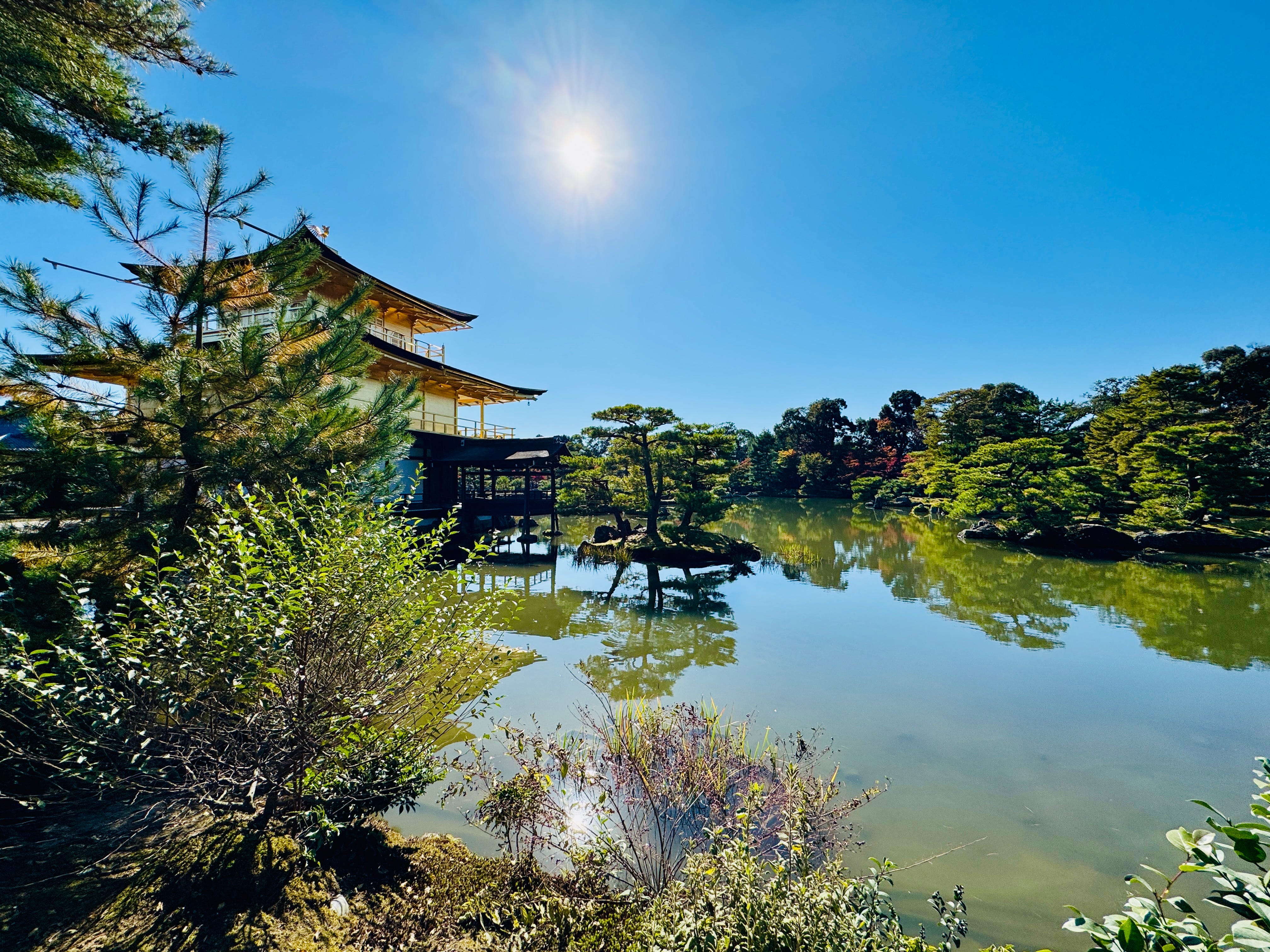
“When you choose the kind of nature you personally love, your body naturally relaxes.” Yoshifumi Miyazaki, Professor, Chiba University
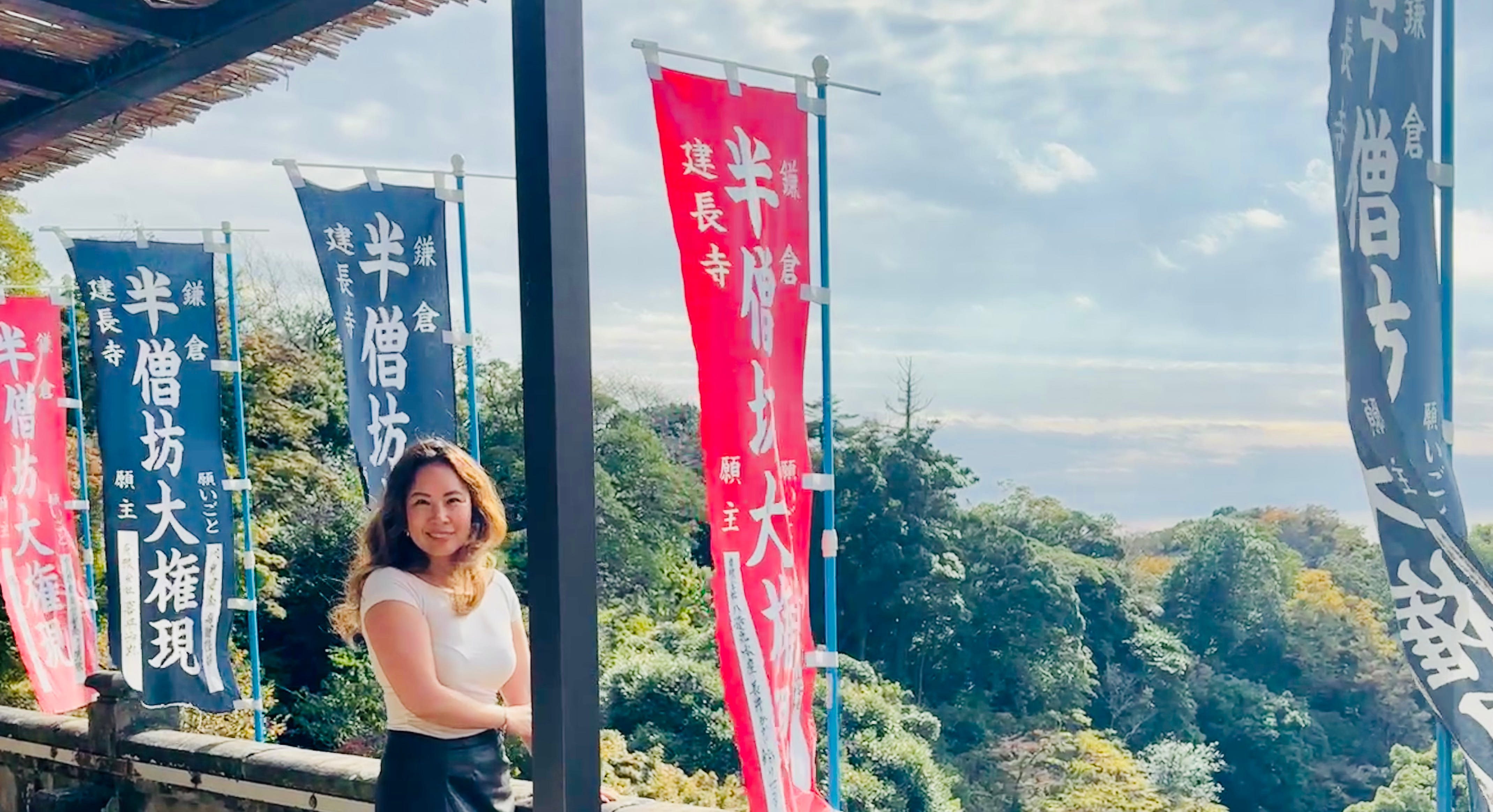
At every temple, it happened before I reached the main hall. Before I lit incense or bowed or read a single word, the shoulders dropped and the breath slowed without any decision to slow it. I felt it in the first few minutes inside the grounds, every time.
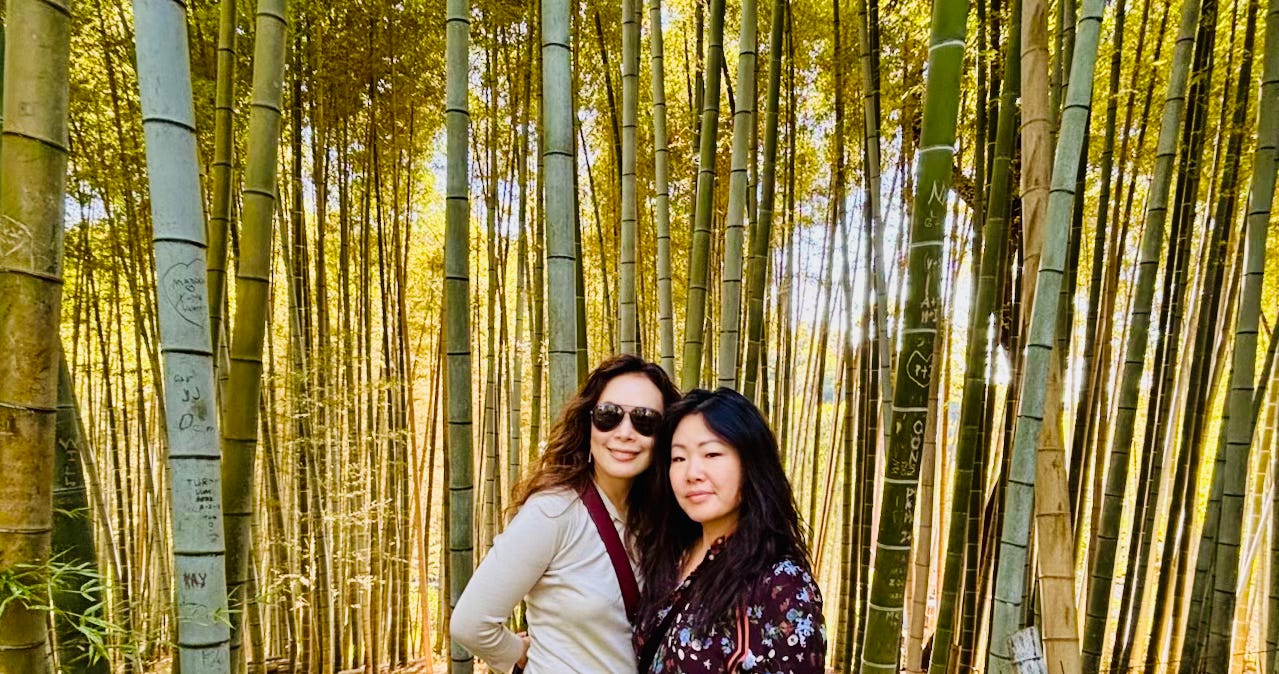
The trip to Japan had been built around hot springs and a family reunion. My sister, who joined at the last minute, had one request: bamboo forests.
Between the springs and the reunion, the temples kept finding us. Between the temples, the forests kept finding her.
At every stop, within walking distance or a short drive from wherever we were soaking, there was a temple or a shrine. Sometimes both. In Japan, Shinto and Buddhism have coexisted for so long that they share grounds, share forests, sometimes share the same building. The water healed something in the body. The temples did something else.
The Forest and the Body
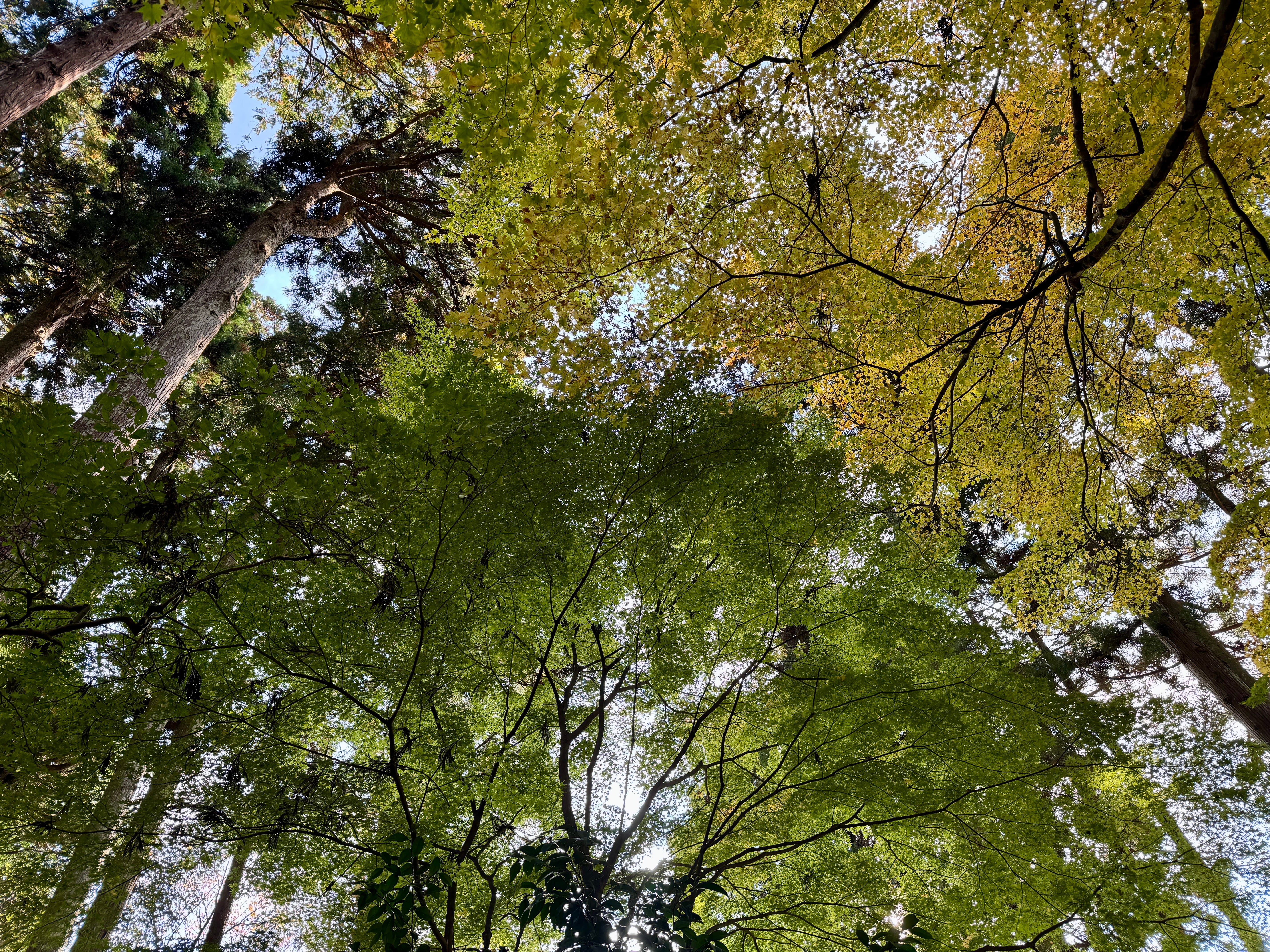
Our first morning in Japan, still adjusting to the time change, I stepped outside the onsen complex near Gotemba and saw Mount Fuji. The mountain was enormous and silent, its snowcapped peak catching the early light, and the effect was arresting. The kind of scale that makes you aware of your own smallness in a way that feels like relief rather than diminishment. In Shinto tradition, mountains are where kami (神, spirit, God, deity) reside. Fuji is the most sacred of all. We visited the shrine grounds in the foothills, where ancient cedars lined the approach and the forest canopy closed overhead like a second ceiling, cooler, greener, quieter than the world outside.
The Japanese have a word for what those cedars do to the body: shinrin-yoku. Forest bathing.
The term was coined in 1982 by the Forestry Agency as a public health idea, and built into a rigorous science by Yoshifumi Miyazaki at Chiba University, a researcher I would later correspond with and whose work would reframe what I experienced on this trip.
The direction of the evidence is consistent. In a study of working-age adults, a forest walk lowered both systolic and diastolic blood pressure, with sympathetic nervous activity falling and parasympathetic activity rising.¹ In a separate line of research, forest-bathing trips raised natural killer cell activity, a marker of immune surveillance, and lowered urinary adrenaline, with the immune effect still measurable more than thirty days later.²
Among participants with depressive tendencies, the shift was more pronounced. A single forest session improved tension, anxiety, anger, fatigue, and confusion to the point where their mood scores no longer differed significantly from participants without depressive tendencies.¹ It was one study, and that subgroup was small, so the finding should be held with care. But it sits inside a larger body of work: multiple meta-analyses find that forest exposure measurably reduces anxiety, cortisol, and negative affect. The studies vary in quality. The direction does not.
Standing in the forest near that Shinto shrine, surrounded by cedars that predated any of us by centuries, I felt what the data describes. But I also felt something the data does not capture.
According to Shinto, the natural world is not separate from the spiritual world. Kami inhabit rocks, rivers, trees, mountains. To walk through a sacred forest is not a metaphor for encountering the divine. It is the encounter itself.
The body drops its guard because, in the Shinto understanding, you are not visiting nature. You are returning to it.
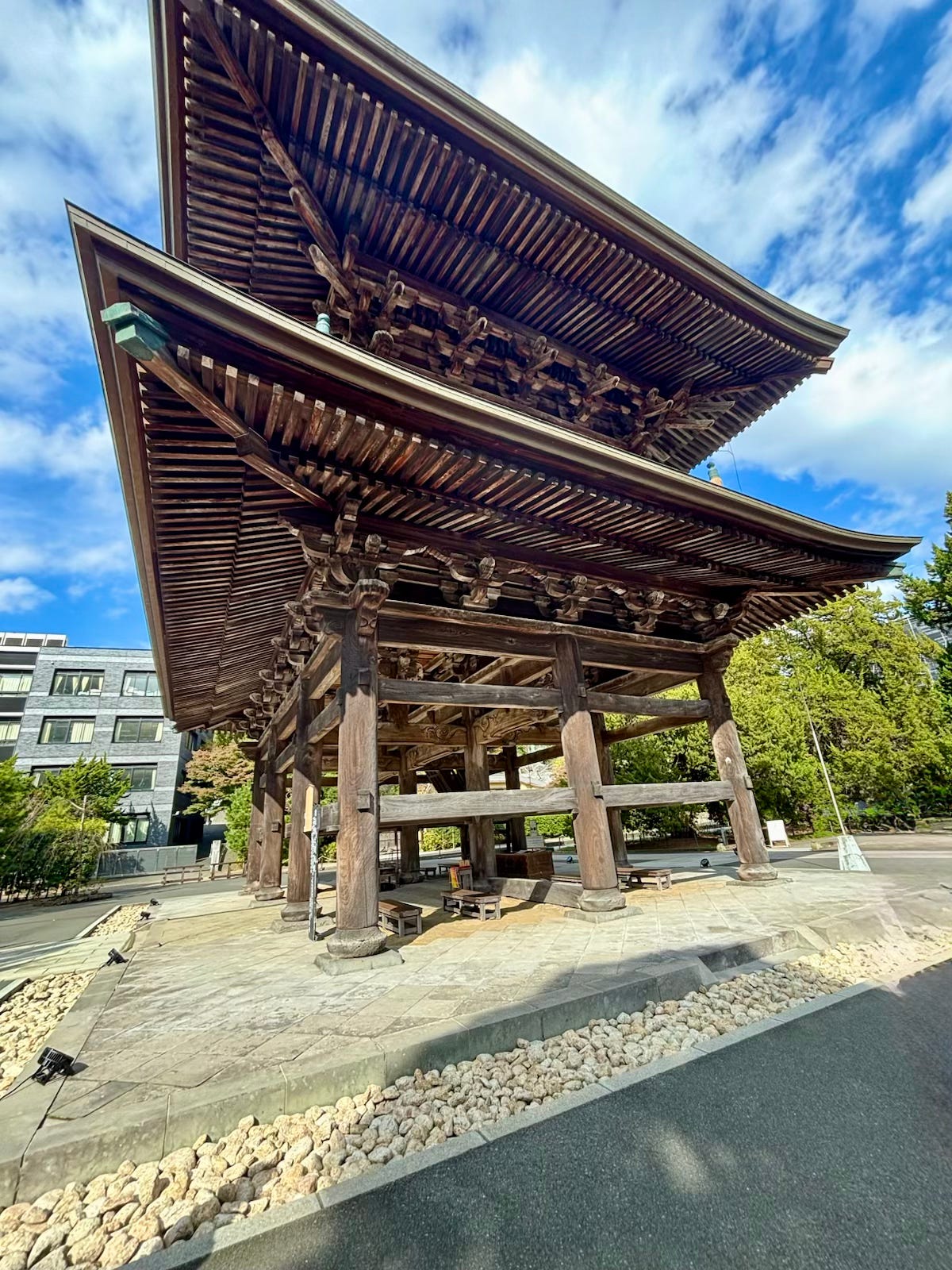
Across the trip, the temples kept teaching me a version of the same lesson, each in a different register. Nara’s Todai-ji did it through scale. The Vairocana Buddha sits 15 metres tall, originally cast in bronze in 752 CE, housed in one of the largest wooden structures in the world. I stood in front of it for a long time, not praying, not meditating in any formal sense. Just standing still.
That stillness turns out to be neurologically significant. A landmark fMRI study in the Proceedings of the National Academy of Sciences found that experienced meditators showed reduced activity in the main nodes of the default mode network, the system behind mind-wandering and self-referential thought.³ The same meditators showed stronger coupling between the posterior cingulate, the dorsal anterior cingulate, and the dorsolateral prefrontal cortex, regions tied to self-monitoring and cognitive control. The pattern held not only during meditation but at rest, as if sustained practice had nudged the resting brain toward a meditative baseline.³
Structure can shift too. After an eight-week mindfulness course, participants showed increased gray-matter density in the hippocampus, a region central to learning and memory.⁴ In the same kind of program, the participants whose stress fell the most also showed the greatest reduction in gray-matter density in the amygdala, the brain’s alarm center.⁵ That was a correlation, not a uniform shrinkage, and larger recent trials have not always reproduced these structural findings.
A neuroscientist at New York University went further, scanning Buddhist monks with fMRI and discovering that experienced meditators can simultaneously activate both the default mode network and the task-positive network⁴. In untrained individuals, these networks operate like a seesaw; activating one suppresses the other. The monks achieved both at once, a state of the untrained brain does not spontaneously produce.
In that hall, before a bronze face that has watched 1,300 years of visitors stand exactly where I stood, something in the default mode quieted on its own. And afterward, at Kasuga Taisha, walking between thousands of stone lanterns that devotees had donated over centuries, each one a marker of someone else’s pause, the quiet held.
The temples were not teaching me to meditate. They were environments engineered for stillness, and the body responded before the mind caught up.
The Hour I Lost
The temple that taught me the most was Sanzen-in, a Tendai Buddhist temple set into the mountainside in Ohara, where we stayed at the inn whose onsen sat among trees and whose food came from the living table of local fermentation. The moss garden is famous: centuries of growth covering stone and earth in a carpet so green it looks artificial until you touch it and feel the living density underneath. Small stone statues of Jizo, the bodhisattva who protects children and travellers, sit scattered among the moss with expressions somewhere between serenity and amusement.
I sat on the wooden veranda overlooking the garden for what I thought was fifteen minutes and turned out to be nearly an hour. No phone. No conversation. Just the sound of water moving through stone channels, birds I could hear but not see, and the occasional shift of wind through the cedar canopy.
Japanese philosophical and religious traditions share a foundational principle that mind and body comprise a unit that operates in harmony with nature⁵.
Shinto, Buddhism, and the ki philosophy that underlies Japanese martial arts all treat mental, physical, and environmental factors as integrated dimensions of health. Western philosophy has its own non-dualist traditions, from Merleau-Ponty to the biopsychosocial model that now appears in medical textbooks. But the institutional backbone of Western healthcare, its separation into specialties that rarely talk to each other, still carries the Cartesian inheritance. These Japanese traditions never built that wall.
That integration is what Sanzen-in’s garden embodies. Sitting in it is simultaneously physical (the body at rest on wood, the breath slowing in cool air), psychological (the mind releasing its grip on the schedule), and environmental (the forest pressing in from all sides, the moss and stone and water forming a landscape that rewards attention without demanding it).
The traditions that built this space understood the unity before anyone had a word for psychosomatic medicine.
Other temples across the trip reinforced the principle through different means. In Kyoto, Ryoan-ji’s rock garden, fifteen stones arranged on raked white gravel so that no matter where you stand at least one stone is hidden from view, felt like a spatial argument for the limits of perception. In Kamakura, where we went for the family reunion, the Great Buddha at Kotoku-in has sat outdoors since a tsunami destroyed its hall in 1498, five centuries of weather giving the bronze a green patina that shifts with the hour. There is something in an open-air Buddha, no walls, no ceiling, no separation from the elements, that felt truer to the Zen tradition than any enclosed shrine.
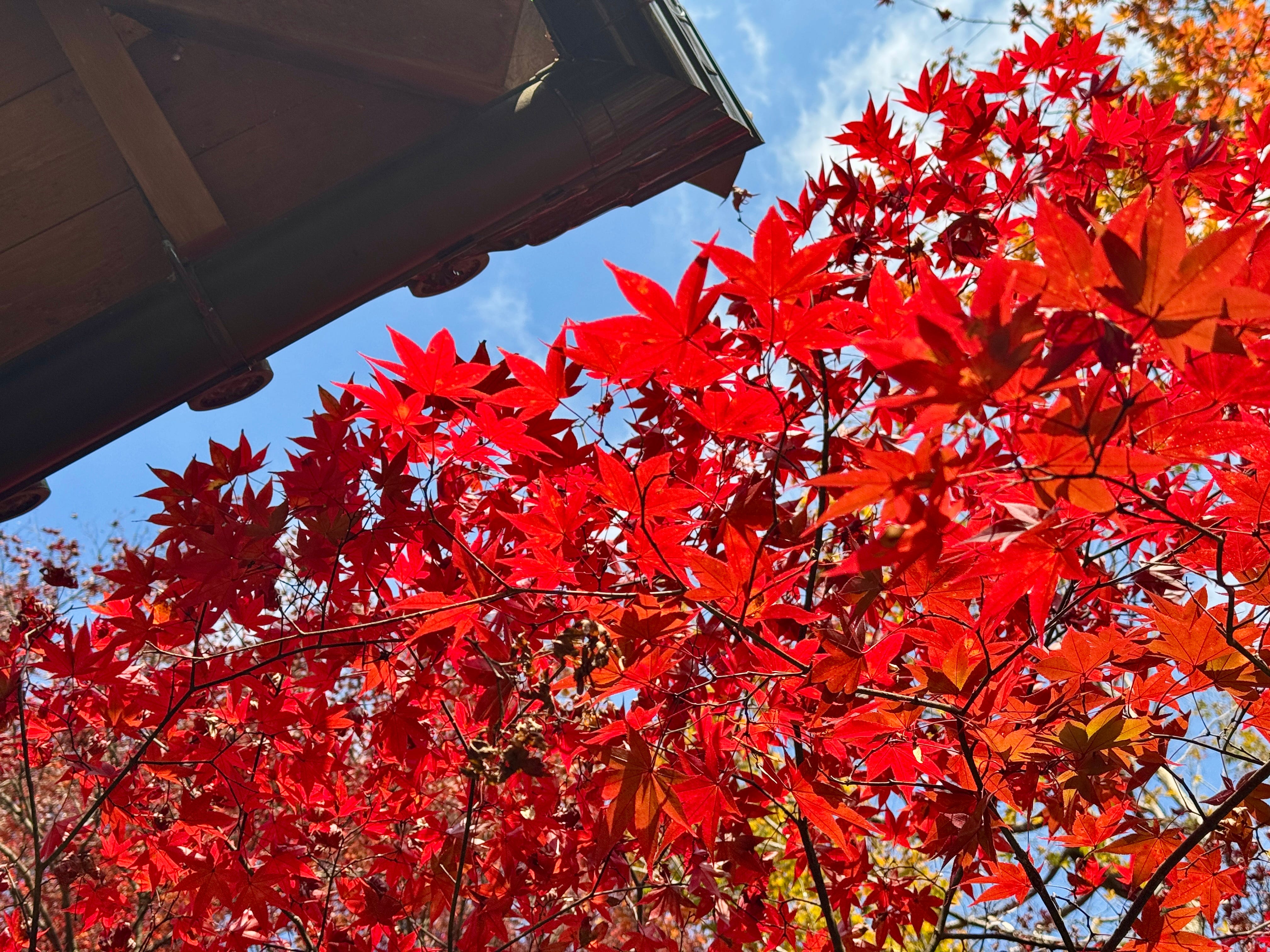
We had arrived expecting to be too late for the autumn colour, but the season had run behind the previous year. By the time we reached the southern temples, the maples were at full turn, and the approach to every shrine was lined in red and gold that photographs cannot capture because the light was moving through the leaves, not sitting on them.
We found the bamboo near several of the temples, dense groves where the stalks rose thirty metres and the canopy filtered the light into something green and diffuse. My sister would walk into them and go silent. The trunks creaked against each other in the wind, a sound nothing else makes. She did not need a study to explain what was happening. Her body told her.
Shinto’s purification rituals, encountered at every shrine from the sacred forests of Gotemba to the cave shrines of Enoshima, run on that same integration.
Defilement and purification work simultaneously on three dimensions: body, mind, and external environment⁵.
Physical purification through water purifies the mind and the surroundings, because the tradition holds that these three domains are the same system viewed from different angles.
What the Temples Protect
A 2025 study in Scientific Reports found that among older adults, observing the Buddhist Five Precepts, refraining from killing, stealing, sexual misconduct, intoxication, and false speech, alongside a meditation practice, predicted fewer depressive symptoms.⁸ A separate study found that the same precepts buffered the link between perceived stress and depression, raising the variance explained in depressive symptoms to 47.6 percent.⁹
These are not small effects. The forest can lower cortisol. The meditation rewires the default mode network. The ethical framework protects against depression. The temple architecture slows the body before the mind catches up. Japanese practice never divided these into departments. The traditions treated them as one system, and the clinical literature is only now arriving at the same conclusion.
In the temples, nobody instructed me to breathe differently. But the environments were designed to slow everything down, including breath. The low doorways that force you to bow. The paths that curve rather than proceed straight. The gardens that reward patience. The incense that asks you to inhale consciously.
The Researcher Who Said “Choose”
Yoshifumi Miyazaki did as much as anyone to turn forest bathing into a science. The Chiba University professor has spent decades recording what happens to the human body when it enters a natural environment, work that has since widened from forests to wooden interiors, natural sounds, and photographic images of nature. When I wrote to him after we came home, he answered.
His most striking finding is how little it takes.
Indoor sensory proxies for nature, images of forests, wooden surfaces, recorded birdsong, can induce measurable physiological relaxation in as little as 90 to 180 seconds.
In one study, ninety seconds of looking at forest imagery lowered activity in the right prefrontal cortex and tipped heart rate variability toward the parasympathetic, the body’s rest-and-recovery mode.¹⁰ His lab has even named one piece of this, an adjustment effect, in which the people who arrive most stressed show the largest calming, so the same setting moves a group toward a common, lower-arousal baseline rather than affecting everyone the same way.¹¹ The body responds to a representation of nature much as it responds to a real forest, even in an office or a high-rise.
I had written earlier about why moving outside changes more than your heart rate, the finding that the same exercise yields greater psychological benefit outdoors than indoors. Miyazaki’s work suggests one reason: the nature is doing its own therapeutic work while you move through it, on top of the movement.
When I asked how his lab measures relaxation, the answer surprised me with its simplicity. For brain activity, near-infrared spectroscopy tracking prefrontal blood flow. For the autonomic nervous system, heart rate variability. Those two inputs are enough. I had been wearing an Oura ring and a WHOOP strap across the whole trip, recording the same HRV signal his lab uses as its primary measure.
“In my view, HRV measurement alone is sufficient in many situations. It is important to keep the protocol as simple as possible so as not to impose additional measurement-related stress on the participants.”
The green recovery scores my ring showed every morning in Japan were tracking the same signal his lab tracks with research-grade instruments. One number. Sufficient.
But the most unexpected insight from our exchange was about personalization. “Achieved synchronization can only be gained through personal experience,” he wrote. “Researchers should share the message that ‘your own choice is the right one’ and that ‘when you choose the kind of nature you personally love, your body naturally relaxes.’”
He distinguished between passive comfort, which reduces negative factors like noise and discomfort, and active comfort, which pursues positive and enriching experiences. Most of the developed world, he suggested, has achieved passive comfort and now sits in a state of waiting. The shift that matters is toward actively seeking out the kind of nature that resonates with you individually.
“It is essential to evaluate this on an individual basis rather than by using averaged data.”
This runs against the way most health advice is delivered. The standard recommendation is population-level: get 150 minutes of exercise, eat five servings of vegetables, meditate for ten minutes. Miyazaki is saying something different. The prescription is personal. The forest that heals me may not be the forest that heals you. The temple that quieted my default mode in Nara might leave you restless. His most recent paper, published this year, found that simply viewing a natural seascape through a high-rise window raised subjective relaxation and shifted the balance of activity across the prefrontal cortex.¹² Comfort, in his account, is not only a feeling. It leaves a measurable signature in the brain.
That personalization is the dimension most health frameworks miss. Population-level guidelines assume averaged bodies in averaged environments. Whole-person wellbeing starts where averages end, with the specific nature, specific practice, specific tradition that your body recognizes as its own.
My Reflections
The practices that protect the mind are not only meditative. They are ethical.
The way you live, the commitments you make to not harm, not deceive, not numb, creates a way of living that buffers against chronic stress.
Professor Miyazaki’s research added important dimension. The prescription is personal. My mother’s nature was water. My father’s was food. My sister’s was bamboo forests. Mine was a moss garden I sat in for an hour without noticing. The nine dimensions of wellspan articulate what these traditions already practise: not a checklist of separate domains, but a living whole in which the water and the stone and the food and the forest feed each other.
No one along the way called any of it medicine. The body kept its own record, and the record was clear.
Soul Inquiry
What is the nature your body recognizes, the place or element that quiets your mind before you ask it to? When did you last go there on purpose?
¹ Furuyashiki, A., Tabuchi, K., Norikoshi, K., Kobayashi, T., & Oriyama, S. (2019). A comparative study of the physiological and psychological effects of forest bathing (Shinrin-yoku) on working age people with and without depressive tendencies. Environmental Health and Preventive Medicine, 24, 46. PMC6589172.
² Li, Q. (2010). Effect of forest bathing trips on human immune function. Environmental Health and Preventive Medicine, 15(1), 9-17. https://doi.org/10.1007/s12199-008-0068-3
³ Brewer, J. A., Worhunsky, P. D., Gray, J. R., et al. (2011). Meditation experience is associated with differences in default mode network activity and connectivity. Proceedings of the National Academy of Sciences, 108(50), 20254-20259. https://doi.org/10.1073/pnas.1112029108
⁴ Hölzel, B. K., Carmody, J., Vangel, M., et al. (2011). Mindfulness practice leads to increases in regional brain gray matter density. Psychiatry Research: Neuroimaging, 191(1), 36-43. https://doi.org/10.1016/j.pscychresns.2010.08.006
⁵ Hölzel, B. K., et al. (2010). Stress reduction correlates with structural changes in the amygdala. Social Cognitive and Affective Neuroscience, 5(1), 11-17. https://doi.org/10.1093/scan/nsp034
⁶ Josipovic, Z. (2014). Neural correlates of nondual awareness in meditation. Annals of the New York Academy of Sciences, 1307, 9-18. https://doi.org/10.1111/nyas.12261
⁷ Nakao, M., et al. (2014). The perspective of psychosomatic medicine on the effect of religion on the mind-body relationship in Japan. Journal of Religion and Health, 53. PMC3929030.
⁸ Wongpakaran, N., Klaychaiya, S., Panuspanudechdamrong, C., et al. (2025). A comparative study of the impact of meditation and Buddhist five precepts on stress and depression between older adults and younger adults. Scientific Reports, 15, 15739. https://doi.org/10.1038/s41598-025-99430-w
⁹ Wongpakaran, N., Pooriwarangkakul, P., Suwannachot, N., Mirnics, Z., Kövi, Z., & Wongpakaran, T. (2022). Moderating role of observing the five precepts of Buddhism on neuroticism, perceived stress, and depressive symptoms. PLOS ONE, 17(11), e0277351. https://doi.org/10.1371/journal.pone.0277351
¹⁰ Song, C., Ikei, H., & Miyazaki, Y. (2018). Physiological effects of visual stimulation with forest imagery. International Journal of Environmental Research and Public Health, 15(2), 213. https://doi.org/10.3390/ijerph15020213
¹¹ Song, C., Ikei, H., Miyazaki, Y., et al. (2015). Elucidation of a physiological adjustment effect in a forest environment: a pilot study. International Journal of Environmental Research and Public Health, 12(4), 4247. https://doi.org/10.3390/ijerph120404247
¹² Ikei, H., et al. (2026). Visual stimulation by viewing a seascape from a high-rise window increases subjective relaxation and left–right differences in prefrontal cortex activity. Buildings, 16(7), 1292. https://doi.org/10.3390/buildings16071292